
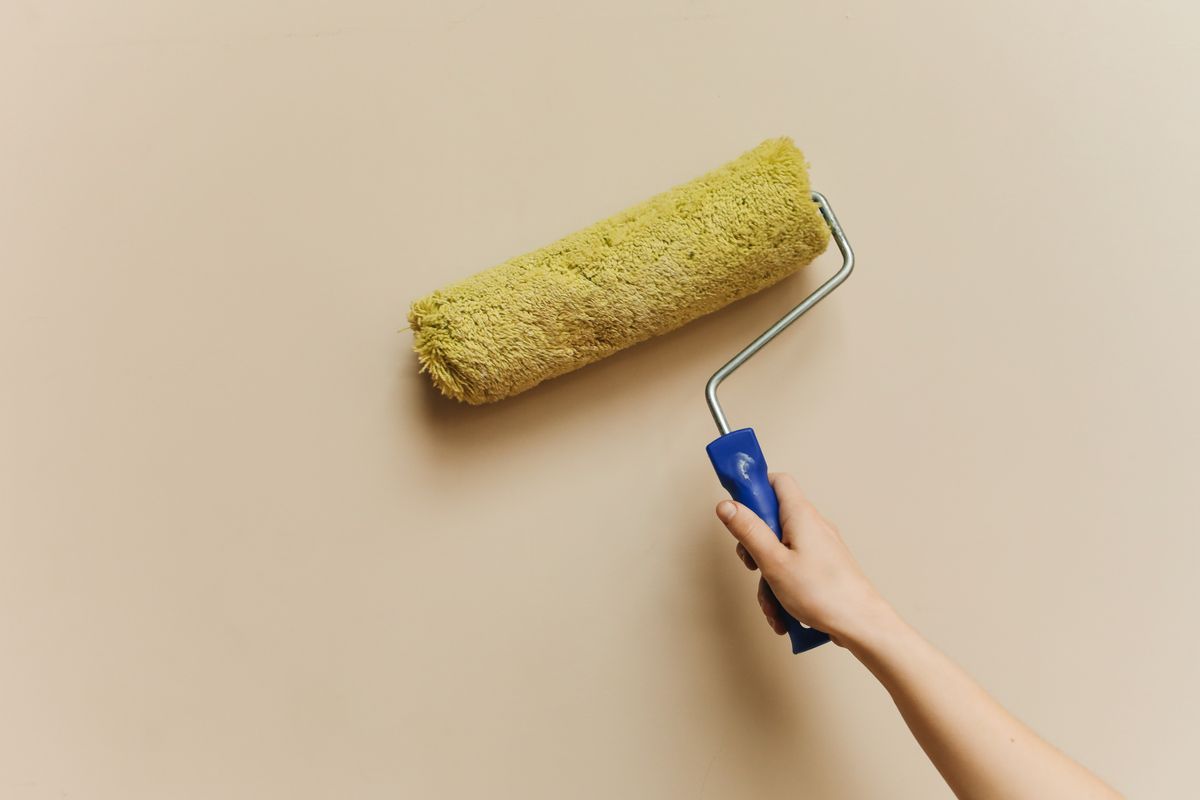
Use flat paint on ceilings; eggshell or matte in living rooms, dining rooms and bedrooms; satin in kitchens, bathrooms, hallways and kids’ rooms; and semi-gloss on trim, doors and baseboards. Higher sheens wash better but show every wall flaw, so older Toronto plaster walls usually look best in matte or eggshell, while busy and humid rooms need satin.
Ask most people which finish to buy and you get a one-word answer: eggshell. It’s not a bad default. But sheen decides more about how a painted room lives than colour does — whether a hallway survives a winter of boots and backpacks, whether a bathroom ceiling starts spotting by March, and whether the wavy plaster in an older Toronto house looks charming or looks like a mistake.
We choose finishes on site with homeowners every week, and it comes down to three questions: how often the surface is touched or wiped, how much moisture it sees, and how flat the wall underneath really is.
The sheen ladder, from flat to gloss
Sheen is how much light the dried paint reflects. Manufacturers name and measure finishes differently — one line’s eggshell can sit close to another’s satin — so treat the names as rungs on a ladder and judge a finish on a painted sample, not the label.
- Flat and matte — almost no reflection. Best at hiding uneven walls, patches and roller marks, and the easiest to touch up invisibly. Traditional flat marks easily and burnishes to a shiny patch when scrubbed; newer washable mattes are far better, but still not satin.
- Eggshell — a low, soft glow. Noticeably more wipeable than matte and still forgiving on average drywall. The default for living spaces for good reason.
- Satin — a clear, velvety sheen that stands up to regular wiping and humidity. It also starts to show patches, nail pops and roller laps.
- Semi-gloss — obviously shiny. Hard, scrubbable and moisture-resistant; the traditional finish for trim and doors. On a wall it magnifies every flaw.
- Gloss and high-gloss — close to a mirror. Very durable and very unforgiving. Best kept to feature doors, railings and furniture-style pieces.
Before committing to a sheen, paint a large sample patch and look at it at night with a flashlight held flat against the wall. That raking light is how low winter sun will hit it — if the sample shows ridges and patch edges now, it will show them in February.
What actually changes as you climb the ladder
Each rung up trades forgiveness for toughness. Four things change together:
- Washability. Higher sheens cure to a harder, tighter film, so marks wipe off instead of soaking in.
- How much the wall shows. Shine reflects light at the angle of the surface, so every dip, ridge and patch edge catches it.
- Touch-up behaviour. The flatter the paint, the better a touch-up blends. A dab of satin on an aged wall almost always shows.
- Moisture and grease resistance. Higher sheens shed condensation and cooking residue better.
No finish wins on all four. The skill is matching each surface to how it is used and what it is painted over.
Room by room: which finish goes where
This is our starting point for a typical GTA home. We adjust it on site once we have seen the walls in daylight.
| Room or surface | Our usual finish | Why | Adjust if… |
|---|---|---|---|
| Living and dining rooms | Eggshell or washable matte | Little wiping at wall height; hides average drywall | Walls are older plaster or heavily patched — go matte |
| Bedrooms | Eggshell or matte | Low traffic; matte looks calm and hides flaws | The headboard wall gets rubbed — use eggshell |
| Kitchens | Satin | Grease and splashes need wiping | Walls are very uneven — a scrubbable eggshell |
| Bathrooms | Satin | Sheds condensation; wipes clean | Powder room with no shower — eggshell is fine |
| Hallways and stairwells | Satin, or eggshell at minimum | Hands, bags, boots and hockey sticks | Long two-storey sightlines — eggshell hides more |
| Kids’ rooms and playrooms | Satin | Crayon and fingerprints need real scrubbing | A teenager’s room that just needs a refresh — eggshell |
| Basements | Eggshell or satin | Cooler walls and rec-room traffic | Any sign of moisture — fix it before painting anything |
| Ceilings | Flat | No glare from windows or pot lights; hides seams | Ceiling over a shower — a moisture-resistant ceiling paint |
| Trim, doors and baseboards | Semi-gloss | Hard and washable; takes kicks and vacuum bumps | Old trim with dents and many layers — satin forgives more |
| Kitchen and bathroom cabinets | Satin or semi-gloss cabinet enamel | Constant handling needs a hard, self-levelling film | Always — this is a specialist job, not a weekend one |
Kitchens and bathrooms
The finish helps, but ventilation does the real work. No sheen survives a bathroom where steam hangs around for an hour after every shower. If the mirror stays fogged long after you are out, or the corner above the tub keeps spotting, the fan is undersized, blocked or not running long enough — and it must exhaust outdoors, not into the attic. A bathroom with no fan at all needs new wiring, which is work for a licensed electrician; we can coordinate that alongside the painting.
Trim, doors and cabinets
Trim takes more abuse than any wall. Semi-gloss is traditional, and its contrast against eggshell walls is what makes a room look finished; on dented, many-layered trim in older homes, satin is kinder. Cabinets need degreasing, scuff-sanding, a bonding primer and a hard enamel laid on without brush marks, then time to cure. Rushed, they chip at the handles within weeks.
How GTA homes change the answer
Plaster walls in older Toronto houses
Many pre-war and post-war houses in neighbourhoods like Leaside, the Annex, the Danforth and East York still have plaster on lath. Plaster is hard and durable, but after decades of settling, patching and repainting it is rarely flat, and satin lets the sun pick out every hump and patch outline. On these walls we usually recommend a washable matte or a low eggshell, with a skim coat where a wall is genuinely rough. A higher sheen only works once the surface is right — which makes it a plaster and drywall repair job before it is a painting one.
Condos and new builds: the builder-flat problem
Most GTA condos and many newer subdivision homes are handed over in one builder-grade flat white. It touches up invisibly, but it marks the moment anything brushes it, and wiping a scuff leaves a shiny smear. On the first repaint we usually step walls up to eggshell or a washable matte and keep ceilings flat. Builder flat can also be chalky: if a damp cloth rubbed on the wall comes away white, prime before painting. In a condo, check your building’s rules before changing the corridor side of your entry door — many condos control it.
Dry winters, humid summers
In January, with the furnace running and the air dry, latex sets fast — the edge of a rolled section dries before you roll back into it, leaving lap marks that show as stripes, worst of all in satin. Work in smaller sections and keep a wet edge. In a muggy July, paint stays soft longer, and freshly painted semi-gloss doors can stick to their stops for days. That is called blocking; airflow and patience are the cure.
Why touch-ups “flash”
Flashing is when a touched-up spot shows as a patch of different sheen, even with paint from the same can. The usual causes:
- Different absorption. Bare filler soaks up paint and dries duller than the painted wall around it unless it is primed.
- Different application. A brush dab is smooth; the rest of the wall has the stipple of a roller.
- An aged wall. Sunlight, cooking and cleaning change the original film, so new paint sits slightly fresher and shinier.
- High sheen. Flat paint hides all of the above; every rung up makes them more visible.
To give a touch-up its best chance, prime filled spots, use the same roller nap as the wall, feather the edges thin and keep the patch small. When it still shows, repaint the wall corner to corner so the eye gets a natural break line instead of a patch.
Keep leftover paint indoors, not in the garage. A can left in an unheated GTA garage over winter can freeze, and frozen latex often turns lumpy and unusable. Write the room, the sheen and the date on the lid.
Primer: when you need it and when you don’t
Repainting a sound, clean wall in a similar colour and the same sheen usually needs two coats of paint and nothing else. Primer earns its place when you have:
- Bare drywall, new patches or skim coats — to even out absorption so the topcoat does not flash
- Water stains, smoke, marker or wood knots — a stain-blocking primer, after the cause is fixed
- Glossy trim, doors or cabinets — scuff-sand and use a bonding primer, or new paint can peel
- Old oil-based paint under new latex — common on older trim; rub a hidden spot with rubbing alcohol, and if nothing softens or comes off, treat it as oil and prime
- A big colour change — a tinted primer saves coats
- Chalky builder flat — prime so the new coat bonds
Paint-and-primer-in-one products work well over sound, previously painted walls, but they do not replace a dedicated primer over stains, bare patches or gloss. In any home built before about 1960, assume older layers may contain lead: do not dry-sand or heat-strip old paint without testing it first.
Can you mix sheens on one wall?
Yes — as long as there is a physical line where the sheen changes. Eggshell walls with semi-gloss trim work because the trim is a separate element. The same logic lets you paint wainscoting, or a hallway wall below a chair rail, in satin for scuff resistance with eggshell above. Walls and trim in the same colour but different sheens give a subtle, tonal look; just expect the shinier surface to read a little differently as the light changes.
What does not work is switching sheen partway across a wall with nothing to stop the eye — touching up an eggshell wall in satin because that was the can in the basement, for example. Under raking light the boundary looks like a mistake. For accent walls, change the colour, not the sheen.
When to hire painters
Plenty of homeowners paint a bedroom well. The jobs where DIY results tend to disappoint — and where hiring interior painters usually pays for itself — are the ones where sheen and surface interact:
- Satin or semi-gloss on walls that are not flat: older plaster, heavily patched drywall, old anchor holes
- Two-storey foyers and stairwells that need safe access and a clean ceiling line at height
- Trim, doors and cabinets, where brush marks and poor adhesion stay visible for years
- Oil-to-latex trim conversions, or old paint in a pre-1960 home
- Dramatic colour changes, or a whole floor that must be finished before a listing date
- Walls that need repair first, where the patching decides the finish
If you are weighing up cost, our guide to how handyman and painting work is priced in Toronto explains what moves a quote: room count, ceiling height, prep and repair, and how much needs protecting.
How we choose a finish with you
On a painting visit, we look at the walls under the light they actually get, ask how each room is used, and recommend a finish for every surface before any paint is bought — including where a wall needs repair or primer first. You get a flat-rate quote agreed before work starts, and the final call on colour and sheen is yours. Send us your rooms and a few photos and we will come back with a clear recommendation and a price.
Frequently asked questions
For living rooms, dining rooms and bedrooms, eggshell is usually better: it wipes reasonably well and hides average wall flaws. Satin is better where walls get touched, splashed or steamed — kitchens, bathrooms, hallways and kids’ rooms. The trade-off is that satin shows patches, nail pops and roller marks more, so it suits walls that are in good shape. On older plaster or heavily patched walls, eggshell or matte usually looks better.
Matte hides imperfections better because it reflects almost no light, so dips, patches and roller laps do not catch the eye. Eggshell has a slight glow that reveals a little more but cleans noticeably better. For older Toronto plaster walls, bedrooms and low-traffic rooms, matte is often the better look. For family rooms and busier spaces, eggshell or a washable matte gives you a wipeable wall without exposing every flaw.
Satin is the best all-round wall finish for a bathroom with a shower or tub: it sheds condensation and wipes clean. Use a moisture-resistant flat or matte ceiling paint overhead and semi-gloss on trim and doors. A powder room without a shower can take eggshell. Whatever the finish, ventilation matters more — an exhaust fan that vents outdoors and runs long enough does more to prevent peeling and mould than any paint.
Yes, with the right preparation. Going to a higher sheen over flat paint is straightforward if the surface is clean and not chalky; if a damp cloth comes away white, prime first. Going from a glossy surface to a flatter one needs the gloss dulled first — a light scuff-sand and a bonding primer — or the new paint may not grip. Either way, the finished sheen is decided by the topcoat, not by what is underneath.
Flat, in almost every room. Ceilings are lit from the side by windows and pot lights, which is the angle that exposes taped seams, patches and roller marks, and a flat finish reflects the least light. Dedicated ceiling paints are also formulated to spatter less when rolled overhead. The exception is a bathroom ceiling above a shower, where a moisture-resistant flat or matte ceiling paint is worth using.
Sources & further reading
Related service

Alan
Project Manager, FixitPlus Inc.
Alan has spent more than 20 years building in the Greater Toronto Area — custom homes from foundation to final trim, second-storey additions, and full-house renovations. He runs every FixitPlus job as the single point of contact, from the first quote through the final walkthrough, and writes the advice on this site from what actually happens on site.
- 20+ years of custom-home building across the GTA
- Project manager on new builds, additions and whole-home renovations
- Single point of contact on every FixitPlus job
Need this done at your place?
Get a free, no-obligation quote from a builder-trained crew.